
Stages of speech development
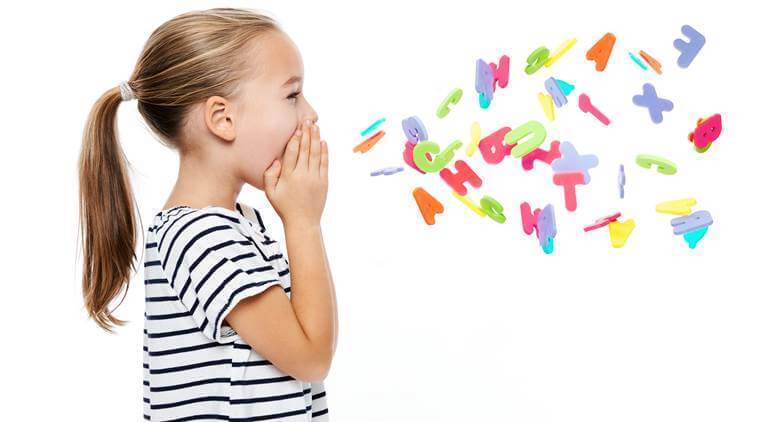
Recall how a child begins to speak. Similar standards help guide us on what to focus on at a certain age.
0-6 months follows the speaker, turns himself in the direction of the voice.
6-12 months child Trying to repeat the sounds uttered by the head. Uses a sequence of sounds to express a word, eg associated with water. Responds to simple interlocutor instructions with motor movement, e.g., clapping, delivering a toy. When naming a person / object, try to look at it, for example, look at the mother at the mention of the mother.
1-2 years The first thoughtful words appear. Indicates at least one part of the body. Adequately responds to familiar words. Understands and executes one-step instructions. Understands up to 50-80 words. Understands simple questions.
2-3 years understands several hundred words (up to 300). Uses 2-3 words, but sometimes does not grammatically form sentences correctly. Answers simple questions verbally. Performs 2 step instructions. He enjoys listening to short stories, often trying to tell a story with illustrations. Indicates 6 parts of the body. Distinguish at least 3 colors.
3-4 years we learn adjectives, for example I know which is big / small, high / low. Starts using the plural. Uses a lot / a little. Starts asking questions. Understands up to 1500 words. Begins to use words expressing spatial relations. For example: inside, outside, above, below.
5 years enriches his vocabulary. Already uses words to express emotions. Connects emotion and facial expressions. Begins to correctly combine nouns and adjectives in turnover and numbers. When quoting, several sentences are connected by links. Uses words to describe circumstances and definitions, e.g. Follows the story of the past. Asking questions why? When? Where?
6 years can distinguish between real and fictional words. Correctly some special and technical terms, for example: pediatrician- pediatrician. Names words with opposite meanings. Asks questions to understand the meaning of an unknown word. When telling a story, he tries to guess what will happen. May make the first assumptions. Begins to use subordinate clauses: that, which, if, because. Changes the intonation, ie realizes that a family member should be treated differently at home while a stranger should be avoided on the street with cedars.
Source - UNICEF 2010 publication "Early Development Standards". Also f. Bruges et al. In the book of Moses, "This is how children learn to speak."