
Development of emotional intelligence in children
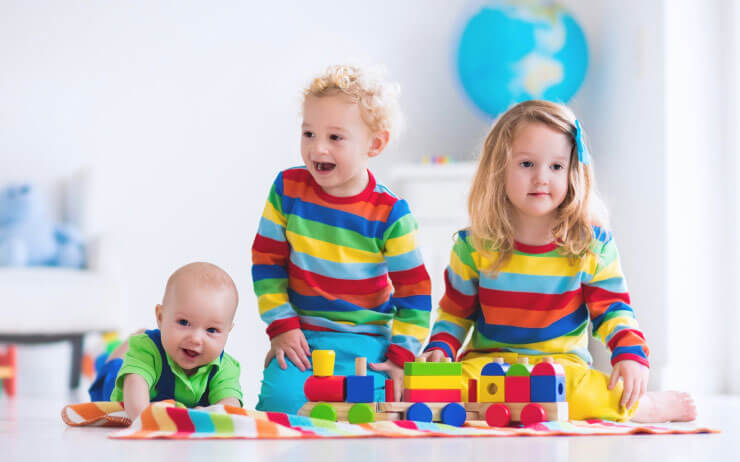
Social Cognition - As an ability to understand social relationships, it is one of the parts of emotional intelligence. We can imagine what others think, feel, and understand them.
How social cognition is formed in children according to Robert Selman:
0-6 years of stage of undifferentiated egocentrism. Children at this age fail to draw a clear line between their own interpretation and that of another person. When asked what the other person feels, they use their own feelings as an answer. During this period, "I" and "other" are not separated.
6-8 years old social-informational stage. The child begins to realize that others may have a different view of something. However, it is difficult to understand why others think differently. Draws conclusions from visible observations. One cannot understand that others may have hidden feelings or motives.
Stage of self-reflection up to 8-10 years. At this stage, the child is able to separate from his own thoughts and see and accept the views of other people, to draw conclusions about the positions of others, to analyze his own behavior and his motives from the position of another person. at the same time. The "I think - you think" principle applies and it is impossible to get a broader, third-person point of view.
10-12 years. The stage of accepting a third party point of view. He can see himself in the role of both object and subject from the point of view of a third person. Friendship is now seen not as a process of satisfying each other’s needs, but as a series of interactions.
From 14 years to adulthood. The stage of accepting social views. It is realized that foreign motives, behaviors, thoughts and feelings are caused by psychological reasons, and also unconsciously (understanding this, of course, is intuitive: although not all adolescents can formulate their terms in psychology). Adolescents begin to understand that a person is a system of traits, beliefs, values and rules, and this system has its own history of development.